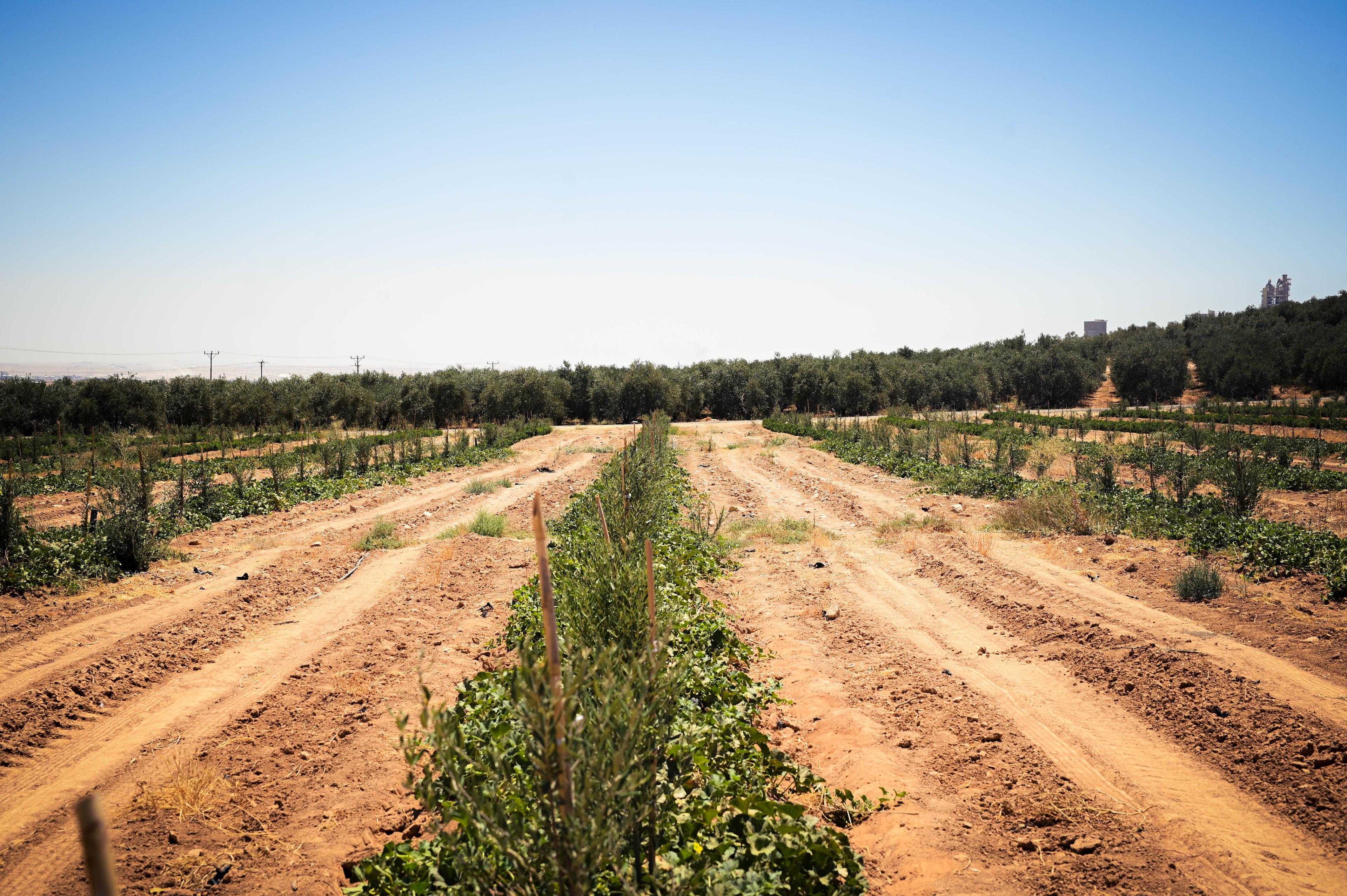

This paper examines the state of agricultural holding (AHs, hereinafter) registration in Jordan, a key regulatory instrument in the agricultural sector intended to support agricultural planning and policymaking through the development of an accurate national database. Historically, the agricultural holdings system was designed as a tool for data development and control. However, current practices reveal a substantial gap between the legal framework and implementing instructions, on the one hand, and actual practices within the directorates of agriculture, on the other. As a result, the agricultural registry—originally conceived as a statistical and planning instrument—has increasingly evolved into a bureaucratic administrative burden, affecting more than 68,000 farmers and approximately 87,000 agricultural holdings registered in the Ministry of Agriculture’s electronic system. This paper employs a mixed analytical approach, integrating a review of relevant laws—including the Agriculture Law, Civil Law, investment legislation, and electronic transactions—with an analysis of the 2022 Instructions on Registering Agricultural Holdings. It also includes qualitative interviews with farmers, legal experts, and officials from the Ministry of Agriculture and its departments. The legal and institutional review uncovers several flaws in the instructions. First, the definition of agricultural holdings in the instructions does not align with the legal definition provided in the Agriculture Law. Second, although the instructions specify a five-year validity for the agricultural holding certificate, the registration is actually renewed annually. Lastly, the instructions require signatures from all shareholders for renewal, which conflicts with civil law provisions that mandate signatures from the majority of owners or their authorised representatives. Implementation faced several practical challenges. Firstly, registration documents must be submitted annually in hard copy, even though the data are already stored in the national electronic system. Procedures differ greatly among agricultural directorates, and there are no standardised timelines for completing registration processes. Field inspections are also weak and inconsistently enforced. Moreover, the agricultural holding certificate has become a mandatory requirement for accessing government services, especially for recruiting agricultural workers. This change shifts the registry's original purpose of statistical and planning functions, increasing administrative burdens on Ministry of Agriculture directorates without offering equivalent statistical benefits. The comparative table underscores gaps between the legal framework, the implementing instructions, and actual practice. These gaps appear in various areas, including the definition of agricultural holdings, the validity period of certificates, documentation requirements, field inspection procedures, joint property management, and data usage. Together, these inconsistencies weaken the Ministry of Agriculture's ability to build a coherent agricultural information system. They also harm the agricultural work environment. Farmers face higher costs and increased administrative effort. At the same time, the effectiveness of the agricultural services system is reduced. The paper presents two sets of recommendations: The first is policy-related and includes accepting the holding registration certificate as an official document for the purposes of the Ministry of Labour, Social Security Corporation, and banks. They also suggest amending the instructions to align it with the agriculture law and the civil law, adopting the electronic signature as a replacement for notarised powers of attorney. The second set of recommendations, which addresses procedural reforms, emphasises strict adherence to the five-year validity period and the linkage of each agricultural holding to an up-to-date digital profile; the development of an electronic verification mechanism for agricultural holding certificates; the standardisation of field inspection procedures across all agricultural directorates; the establishment of clearly defined processing timelines not exceeding two working days per transaction; and the introduction of an error-flagging system to facilitate the correction of errors without disrupting or delaying service provision. The paper concludes that reforming the agricultural holdings system is a key lever for strengthening agricultural governance, empowering farmers, advancing digital transformation, and restoring the agricultural registry to its original function as a planning and development tool in line with the Economic Modernisation Vision, while simultaneously reducing the bureaucratic burden on Jordan’s agricultural sector.